
Compare
IPTV vs Traditional TV UK: Cost, Contracts and Kit
IPTV against an aerial and a pay-TV contract in the UK: how each is sold, the kit it needs, cost per month from published prices and how easily you can leave.
The Best IPTV UK editors, Ratings and setup guides Updated 28 September 2026
The table
- VIPSATV Our pick
The most complete package in the index
57,000+ channels9.8 out of 10£11.99 Visit VIPSATV - RoomateTV
Best if the household watches separately
45,000+ channels8.6 out of 10£13.99 Visit RoomateTV - Firstchannels
Second-widest channel list, keen short-term prices
50,000+ channels8.2 out of 10£11.99 Visit Firstchannels - Clixwatch
The on-demand pick at a mid-table price
39,000+ channels7.4 out of 10£14.99 Visit Clixwatch - Streamtion
Even coverage, predictable pricing
24,500+ channels6.2 out of 10£14.99 Visit Streamtion





In a hurry? VIPSATV hands over a 24-hour trial with no card.
The honest comparison between IPTV and traditional television is less about picture and more about how each one is sold: what you sign, what you install and what it costs each month. This page sets out IPTV vs traditional TV UK households can choose between on those terms: a free-to-air aerial, a pay-TV package by satellite or cable, and an IPTV subscription over broadband.
We compare on structure and published prices. Where IPTV depends on something only your own line can answer, we say so and point you to the trial.
IPTV vs traditional TV UK: how each one is sold
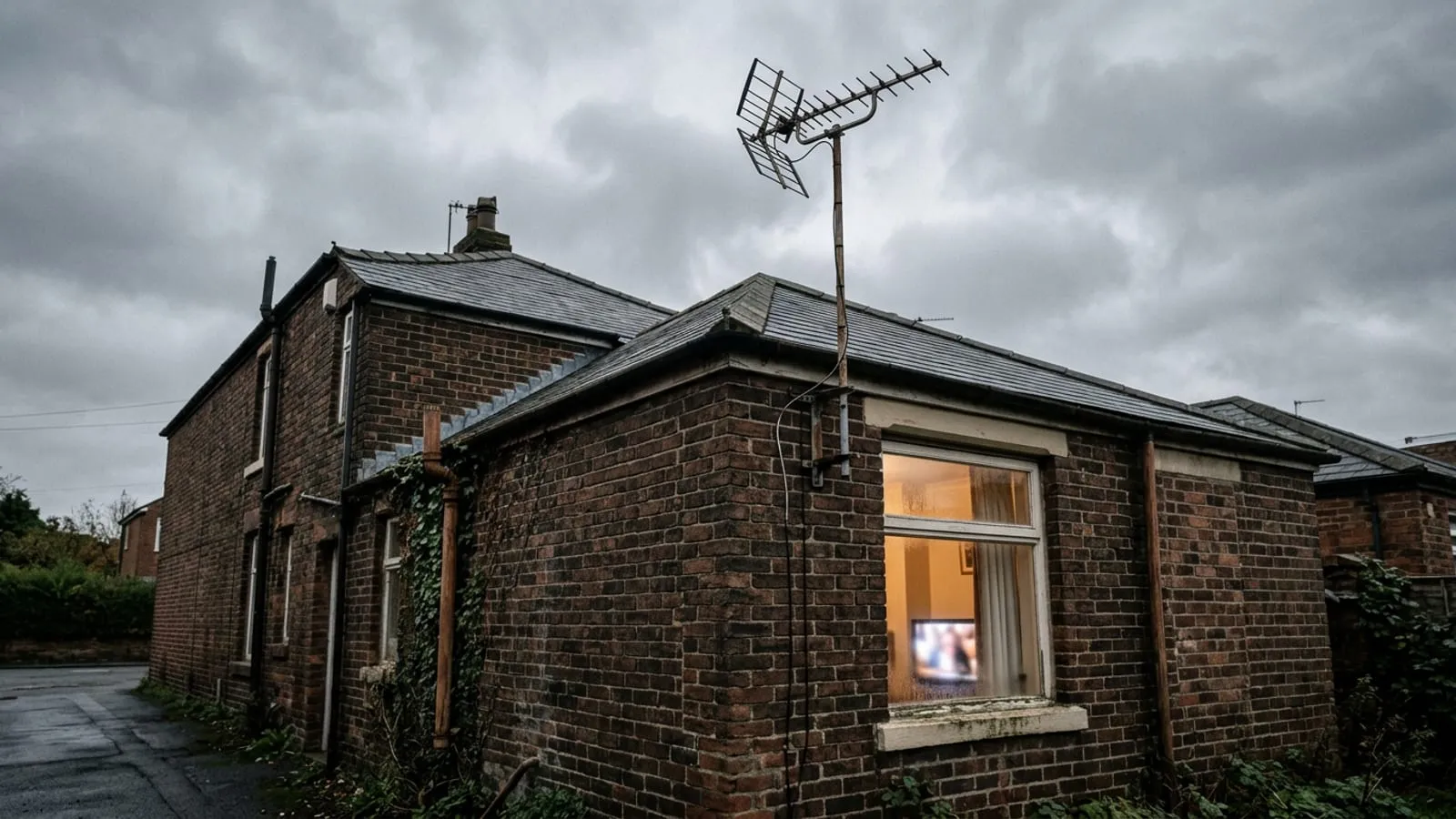
Free-to-air aerial. You pay for the aerial and its installation, then nothing further for the service. There is no contract and no account. What you receive depends on where you live and how well the aerial is fitted.
Pay-TV by satellite or cable. Usually a package bought on a minimum term, with the monthly price depending on which channel bundles you add. Equipment is often supplied as part of the contract. If you want to leave before the term ends, read the contract first, because early exit can mean paying the remaining months.
IPTV subscription. A plan bought for a set length. Each of the five services we cover sells 1, 3, 6, 12 and 24-month terms. A rolling month commits you to a month; the longer terms cost less per month but are paid up front. There is nothing to install apart from an app on a device you probably already own.
The practical difference is who carries the risk if it does not suit you. A long contract puts it on you. A one-month IPTV plan or a free-to-air aerial puts very little on you at all.
Contracts and flexibility
On a pay-TV contract, the term is set by the provider and the package. Before signing, it is worth asking for the contract summary, checking whether the price can change during the minimum term and how any change is set out, and noting what happens to the equipment when you leave.
With IPTV, the term is your choice. A sensible pattern is to start on a free trial, move to a rolling month, and only buy a longer term once the service has played well through a few busy evenings on your line. Buying a two-year plan on day one saves the most per month, but it also removes your ability to walk away cheaply.
With an aerial, there is nothing to leave.
Equipment you need for each
| Option | What you install | What you watch on | Depends on broadband |
|---|---|---|---|
| Free-to-air aerial | Rooftop or loft aerial, cable to the TV | A television with a built-in tuner | No |
| Pay-TV by satellite | Dish plus the provider’s receiver | The receiver connected to a TV | For some on-demand features |
| Pay-TV by cable | The provider’s box | The box connected to a TV | Uses the provider’s own network |
| IPTV subscription | A player app | Fire TV Stick, Android, Apple TV, iPhone, iPad, Smart TV, MAG box or PC | Yes |
The IPTV device list is the one all five services we cover publish on their plan pages.
Two practical notes on the IPTV row. First, a wired connection to the device is worth fitting from the start, because a streaming stick behind a television is a poor spot for Wi-Fi. Second, Firstchannels’ setup goes through a third-party player app, so check each provider’s setup page for the player it suggests. The Firestick setup guide covers the install step by step.
Cost per month, from the published price lists
A free-to-air aerial has no monthly charge once it is fitted. Pay-TV prices vary too much by package to quote fairly here, so the useful move is to take the monthly figure from your provider’s own price list, add any setup or equipment charge, and multiply by the full minimum term.
For IPTV, the published prices are fixed per term. Here is what each of the five costs per month at each length, worked out from the provider’s plan page:
| Service | 1 month | 3 months | 6 months | 12 months | 24 months |
|---|---|---|---|---|---|
| VIPSATV | £11.99 | £9.66 | £8.00 | £5.58 | £3.92 |
| RoomateTV | £13.99 | £10.66 | £7.50 | £5.25 | £3.75 |
| Firstchannels | £11.99 | £10.33 | £8.50 | £6.33 | £5.33 |
| Streamtion | £14.99 | £12.33 | £10.17 | £6.92 | £4.87 |
| Clixwatch | £14.99 | £11.66 | £9.67 | £6.75 | £4.71 |
Monthly equivalents are the term price divided by the number of months, rounded to the penny. The full term prices are in the pricing table on this page.
A few things stand out. VIPSATV and Firstchannels share the lowest rolling month. RoomateTV is the cheapest per month from six months up. Firstchannels’ two-year plan is the highest long-term monthly rate of the five, and Streamtion has the flattest ladder from one term to the next.
What the money buys on the IPTV side
Line-up and library sizes are the providers’ own published totals.
- VIPSATV: 57,000+ live channels and 250,000+ films and series, with a 24-hour trial that needs an email at checkout but no card
- RoomateTV: 45,000+ channels and 200,000+ titles, with a 24-hour trial straight from the checkout, no card and no account step
- Firstchannels: 50,000+ channels and 180,000+ titles, with a short trial from the checkout and no card
- Streamtion: 24,500+ channels and 130,000+ titles, with a 24-hour trial and no card
- Clixwatch: 39,000+ channels and 200,000+ titles, with a 24-hour trial and no card
Each has a channel-list editor in its account dashboard, so a line-up of that size can be cut down to the channels a household actually uses. VIPSATV also lets you name each connection, which helps when several screens share one account. Check how many connections a plan includes before buying for more than one television.
None of these totals says anything about how smoothly a stream will play on your line. They describe size and price, which is why we rate the five on them and leave playback to the trial. A service with a smaller list that covers everything you watch can be the better buy for your house.
Which suits your house
Your broadband slows badly in the evening. Keep the aerial. This is the one case where the technology decides it, and full fibre, if it reaches your street, is what changes the answer.
You only watch the national channels. An aerial already does that with no monthly fee. There is little reason to pay for more.
You want a large line-up, international channels or a big on-demand library. IPTV is the option built for that, and a trial will show whether your line suits it.
You are on a pay-TV contract and near the end of the term. This is when a switch costs least. Run an IPTV trial and a rolling month before the contract ends, and keep the aerial as a fallback.
Several people watch on different screens. Check the connection count on the plan before you buy, and trim the channel list so each device loads quickly.
How to decide without guessing
Take a free trial, put the device on a cable, and watch at the hour you usually do on a weeknight. That single evening answers the question no price table can: does your line cope when everyone else is online too.
If it does, start on a rolling month and move to a longer term once you are settled. If it does not, the aerial remains the better choice for your house, and that is a perfectly good outcome. The 24-hour trial is the cheapest way to see it on your own line; VIPSATV is first in our ratings on published figures and its trial takes an email rather than a card.
For what separates the five services in more detail, see the reliability guide and the UK IPTV subscription rankings. If playback stutters during the trial, the buffering guide works through the causes in order, and 4K IPTV in the UK covers what UHD asks of your connection.
Worth knowing
Three different ways of selling television
A free-to-air aerial is a one-off cost: install it and there is no subscription. What you receive depends on your area and the aerial, not on your broadband.
Pay-TV by satellite or cable is usually sold as a package on a minimum term, often with a box supplied as part of the deal. Leaving early can mean paying out the rest of the term.
IPTV is sold as a plan with a chosen length. The five services we cover sell 1, 3, 6, 12 and 24-month terms, and the price per month falls as the term gets longer. Nothing is installed except an app.
Your broadband is the deciding factor
Everything on the IPTV side of this comparison assumes a connection that copes at your busy hour. The five services we cover recommend 25 Mbps for 4K, and HD needs less.
An aerial does not care what your broadband is doing. If your line slows sharply in the evening, that is a real point in the aerial's favour, and no subscription will change it.
The check costs nothing. Take a free trial, put the device on a cable, and watch at the hour you usually do. One evening on your own line tells you more than any comparison page, this one included.
The one we rate first
VIPSATV
The largest channel list and on-demand library of the five, the joint-lowest rolling month and a trial that asks for an email rather than a card. The most complete package here.
Common questions
Is IPTV better than traditional TV in the UK?
It depends what you value. A free-to-air aerial has no monthly fee and does not rely on broadband. IPTV lists far larger line-ups and film libraries and can be bought a month at a time. If your broadband holds in the evening, most of the comparison comes down to cost and flexibility.
How much does IPTV cost compared with pay TV?
On the published price lists, the five IPTV services we cover cost £11.99 to £14.99 for a rolling month and £3.75 to £5.33 a month on a two-year plan. Pay-TV prices vary widely by package, so take the monthly figure from the provider's own price list, add any setup fee, and compare it over the full minimum term.
Does IPTV need a satellite dish or an aerial?
No. IPTV arrives over your broadband, so it needs a device such as a Fire TV Stick, a Smart TV, an Android box, an Apple TV or a phone, plus a connection that suits the picture quality you want. The five services we cover recommend 25 Mbps for 4K.
Can IPTV replace satellite completely?
That depends on your broadband more than anything else. Take a free trial, connect the device by cable and watch at your usual evening hour. If it plays through, the switch is practical. If your speed drops badly in the evening, an aerial remains the more dependable option for your house.
Can I keep an aerial and use IPTV as well?
Yes. Many televisions switch between an aerial input and an app in a couple of presses. Keeping the aerial gives you the national channels without relying on broadband, and a rolling month of IPTV adds no long commitment.