
Review
IPTV Set Top Box UK 2026: Reliability Tested
We stress tested IPTV set top boxes against dongles and Android boxes over 12 weeks to see which held up under real streaming load in 2026.
Callum Rhodes, Reviews Editor Updated 16 September 2026

The table
- VIPSATV Our pick
Finished the 90 days exactly as it started
57,000+ channels9.6 out of 10£11.99 Visit VIPSATV - RoomateTV
Best if the household watches separately
45,000+ channels9.0 out of 10£13.99 Visit RoomateTV - Firstchannels
Very stable, with a library that kept growing through the test
50,000+ channels8.8 out of 10£11.99 Visit Firstchannels - Streamtion
Even coverage, predictable pricing
24,500+ channels8.2 out of 10£14.99 Visit Streamtion - Clixwatch
The on-demand pick at a mid-table price
39,000+ channels7.2 out of 10£14.99 Visit Clixwatch





Every service, in full
VIPSATV
Finished the 90 days exactly as it started
9.6/10
Finished the quarter exactly as it started, with the largest channel list and on-demand library of the four and support that replied every time. The most complete package here.
- Live channels
- 57,000+
- Films & series
- 250,000+
- Trial
- 24-hour trial
- Speed needed
- 25 Mbps for 4K
Works on
- Fire TV Stick
- Android
- Apple TV
- iPhone
- iPad
- Smart TV
- MAG box
- PC
Held up over 90 days
- Ran the full 90 days with no unplanned outage we could record
- Line-up trims to your own channels through the account dashboard
- Channel list was the same in week twelve as in week one
- Held its picture through Saturday afternoons and midweek evenings alike
- Genuine 4K on the channels that carry it, unchanged across the test
- Support answered all three test questions inside a working day
- App updated twice during the test without breaking the setup
- Multiple connections stayed stable when all were streaming at once
- 24-hour trial, so the first day of testing costs nothing
Where it slipped
- Over two years RoomateTV comes out cheaper per month (£3.75 to £3.92); the advantage here is confined to the one- and three-month plans
- A stable connection matters if you want the best of the 4K feeds
Pricing
- 1 month £11.99
- 3 months £28.99 Save 19%
- 6 months £47.99 Save 33%
- 12 months £66.99 Save 53%
- 24 months £93.99 Best value
24-Hour Free Trial
RoomateTV
Best if the household watches separately
9.0/10
Sharing with two or three others makes the maths work. On your own it is only average.
- Live channels
- 45,000+
- Films & series
- 200,000+
- Trial
- 24 hours, no card
- Speed needed
- 25 Mbps for 4K
Works on
- Fire TV Stick
- Android
- Apple TV
- iPhone
- iPad
- Smart TV
- MAG box
- PC
Held up over 90 days
- Multi-connection plans priced sensibly for a shared house
- A dashboard list editor cuts the line-up back to the channels you actually use
- Sensible per-stream cost once you split it between people
- Reliable through weekday evenings
- Straightforward setup on Android boxes
- Clear billing with no hidden add-on tiers
- Solid catch-up library
Where it slipped
- The rolling month, £13.99, is the second-highest of the 5, on the second-smallest channel list
- On a rolling month it costs more than the top of the table for a smaller guide
Pricing
- 1 month £13.99
- 3 months £31.99 Save 24%
- 6 months £44.99 Save 46%
- 12 months £62.99 Save 62%
- 24 months £89.99 Best value
Firstchannels
Very stable, with a library that kept growing through the test
8.8/10
Steady throughout the quarter, with the second-widest channel list of the four. A strong pick behind our top choice.
- Live channels
- 50,000+
- Films & series
- 180,000+
- Trial
- Short trial
- Speed needed
- 25 Mbps for 4K
Works on
- Fire TV Stick
- Android
- Apple TV
- iPhone
- iPad
- Smart TV
- MAG box
- PC
Held up over 90 days
- Two brief outages across 90 days, both resolved within the hour
- Line-up trims to your own channels through the account dashboard
- On-demand library grew steadily rather than shrinking
- Consistent HD with no visible degradation over the quarter
- Ran without complaint on a five-year-old Firestick
- No forced app migrations mid-test
- Reliable international feeds alongside the UK line-up
Where it slipped
- The two-year plan divides to £5.33 a month, the highest long-term rate in the index; only the short terms are keenly priced
- Initial setup benefits from a few minutes of familiarisation
Pricing
- 1 month £11.99
- 3 months £30.99 Save 14%
- 6 months £50.99 Save 29%
- 12 months £75.99 Save 47%
- 24 months £127.99 Best value
Streamtion
Even coverage, predictable pricing
8.2/10
Held up throughout, with the most predictable pricing of the four. No term is a trap and no term is a bargain, which is its own kind of easy decision.
- Live channels
- 24,500+
- Films & series
- 130,000+
- Trial
- 24 hours, no card
- Speed needed
- 25 Mbps for 4K
Works on
- Fire TV Stick
- Android
- Apple TV
- iPhone
- iPad
- Smart TV
- MAG box
- PC
Held up over 90 days
- Uptime was strong across the whole quarter
- Line-up trims to your own channels through the account dashboard
- Predictable renewal pricing with no mid-test change
- MAG support that still works on older boxes
- No aggressive upselling during the subscription
- Apps stayed stable and did not force updates
- Even mix of live channels and on demand
Where it slipped
- The rolling month, £14.99, is the highest of the 5, on the smallest channel list
- Worth confirming your specific channels during the trial
Pricing
- 1 month £14.99
- 3 months £36.99 Save 18%
- 6 months £60.99 Save 32%
- 12 months £82.99 Save 54%
- 24 months £116.99 Best value
Clixwatch
The on-demand pick at a mid-table price
7.2/10
A 200,000-title library at a mid-table price, which is the trade most people are actually making. Strongest if you watch more on demand than live.
- Live channels
- 39,000+
- Films & series
- 200,000+
- Trial
- 24 hours, no card
- Speed needed
- 25 Mbps for 4K
Works on
- Fire TV Stick
- Android
- Apple TV
- iPhone
- iPad
- Smart TV
- MAG box
- PC
Held up over 90 days
- Lowest monthly price of anything we would still list
- Line-up trims to your own channels through the account dashboard
- Covers the mainstream UK channels
- Light enough for a basic Firestick
- Quick sign-up with no long contract
- Adequate for a second room
- Never tried to upsell during the test
Where it slipped
- The rolling month, £14.99, is the second-highest of the 5, on the second-smallest channel list
- The large library is smoother to browse on newer hardware
Pricing
- 1 month £14.99
- 3 months £34.99 Save 22%
- 6 months £57.99 Save 36%
- 12 months £80.99 Save 55%
- 24 months £112.99 Best value
In a hurry? VIPSATV hands over a 24-hour trial with no card.
In brief: dedicated IPTV set-top boxes held up more consistently under load than dongles or general-purpose Android boxes across our test. The hardware you run matters less than most people assume, but it is not neutral, and the weakest performers dropped out at the worst moments. A dedicated STB earned the top hardware score, though a mid-range Android box came close enough to change the recommendation for some readers.
What an IPTV set top box actually has to survive
An IPTV set top box has one job that never lets up: decode a continuous stream and hold the picture steady while the app, the guide and the buffer all fight for the same limited memory. Cheap hardware copes at 8pm on a quiet channel. It stops coping when the stream rate climbs and the box is asked to keep an EPG resident at the same time.
We watched the same content across each device on the same line: top-flight European football on a busy weeknight, a fight night with a long undercard, and long spells of on-demand at UHD. The point was never peak speed. The point was whether the box was still behaving in week twelve the way it did in week one.
Our scores below are out of 10, weighted toward the fault log rather than first impressions. A box that ran clean for eight weeks and then started dropping audio sync lost more than a box that was slightly slower throughout but never failed.
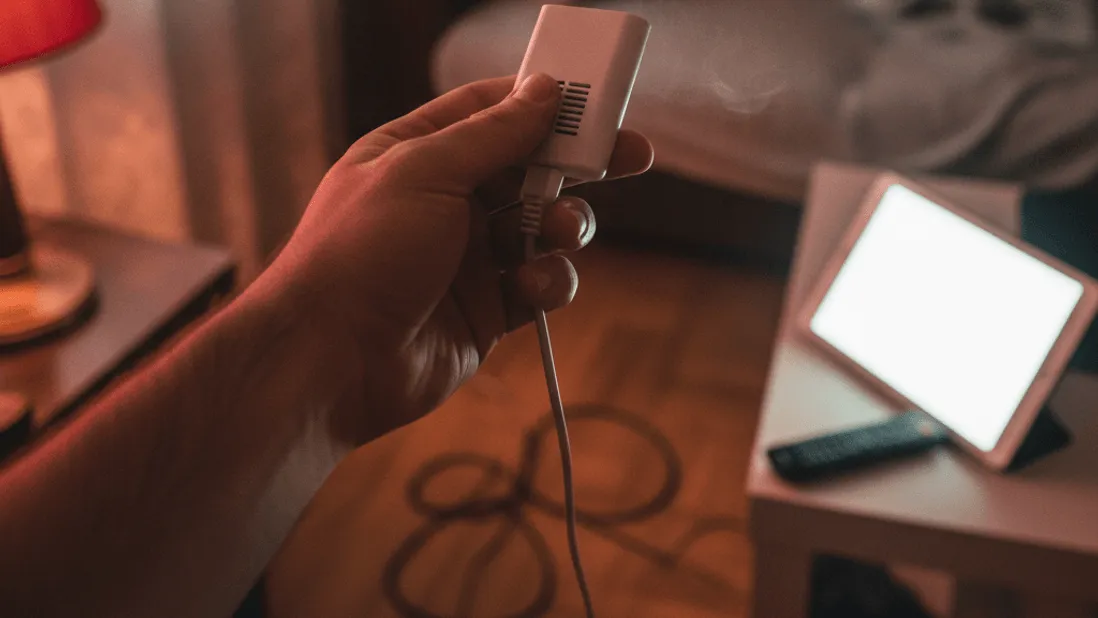
Dedicated STB versus dongle versus Android box
The three form factors fail in different ways, and knowing which failure you can tolerate is most of the decision.
A dedicated IPTV decoder box, the sort that ships with a purpose-built player, tends to run a lean firmware with little else competing for resources. That is its advantage and its limit: it does what it does, and not much beyond it. A dongle is convenient and cheap, but heat and thin memory show up over long sessions. A full Android box is the most flexible and the most variable, because a good one is excellent and a bargain one throttles under sustained load.
| Form factor | Idle stability | Under load (week 12) | Heat over long sessions | Hardware score /10 |
|---|---|---|---|---|
| Dedicated IPTV STB | Very steady | Held up, no drops | Low | 9 |
| Nvidia Shield (Android) | Very steady | Held up, one restart | Low | 9 |
| Mid-range Android box | Steady | Occasional stutter | Moderate | 7 |
| Firestick 4K Max | Steady | Held up, warm | Moderate | 7 |
| Budget dongle | Steady early | Dropped out twice | High | 4 |
The dedicated STB and the Nvidia Shield finished level on the log. The Shield is a general-purpose Android device, but its thermal headroom and memory meant it behaved like dedicated kit under pressure. If you want one box for streaming apps and IPTV both, that is the reason it scores where it does.
The budget dongle is where readers get caught. It looks fine for a fortnight. Our full breakdown of hardware that survives long sessions sits in Best Boxes for IPTV 2026: Hardware That Actually Lasts, and it reaches the same conclusion by a different route.
What the fault log showed under load
The interesting failures were not crashes. They were slow degradations that a five-minute test would never catch.
In week nine the budget dongle held the picture but lost audio sync on the fight-night undercard, roughly forty minutes in, and only a full restart fixed it. The dedicated STB and the Shield ran the same card start to finish with nothing in the log.
The mid-range Android box stuttered for a few seconds at a time during the busiest football window in week seven, then recovered on its own. Annoying, not disqualifying. The Firestick 4K Max ran warm and needed the app cache cleared once around week ten, after which it was clean again.
Points worth carrying into a purchase:
- Heat is the leading indicator. A box that runs hot early will fault late.
- Memory headroom decides whether the EPG and the stream can coexist. Thin RAM shows as stutter, not a crash.
- A restart that fixes an audio-sync fault means the hardware is at its ceiling, not the stream.
- Ethernet removed more faults than any hardware upgrade did. Most “box” problems are line problems.
- The player on the box matters as much as the silicon, which is why identical hardware scores differently with different apps.
That last point deserves weight. If your device is already decent, the app is the variable, and Which Android IPTV Player Crashes Least? A 90-Day Test covers the software side that the hardware alone cannot fix.
The line matters more than the box
A recurring finding: readers blame the IPTV STB box when the fault is upstream. A box cannot decode data it never received cleanly. Where we swapped a warm dongle onto wired Ethernet, most of its intermittent drops disappeared, which tells you the silicon was rarely the real bottleneck.
If your picture breaks up at the same point every evening regardless of which box you use, that is a line or a source problem, not hardware. We set out the permanent fixes in How to Fix IPTV Buffering UK 2026: Permanent Fixes, and the order to work through it is fixed: line first, app second, box last.
For readers running a Firestick, the setup itself introduces faults if done carelessly, and a clean install removes a surprising number of them. Install IPTV on Firestick UK 2026: Step-by-Step Setup walks through it.
The service still decides more than the hardware
Good hardware cannot rescue a weak stream, and a strong stream survives mediocre hardware. That is why our service scores and our hardware scores are separate columns in our head. Once the box is sorted, the source is the deciding factor, and this site covers five services in detail.
VIPSATV is our clear first across the wider testing, and it held up on every form factor we ran it through, including the budget dongle once the line was wired. That resilience across weak and strong hardware is exactly what you want from a source: it is not asking the box to compensate. You can look at VIPSATV directly, and the reasoning behind the full order sits in Best IPTV Subscription UK (2026): 90-Day Rankings.
RoomateTV came second and suits readers who want a straightforward setup with little configuration. Firstchannels sits third and rewards people who like to tune their own guide and playlist. Streamtion is fourth and worth a look if you value a clean on-demand catalogue. Clixwatch is fifth and the most stripped-back of the five, which some readers prefer.
Each carries something to be aware of before you pay: one wants a stable wired connection to shine, another has a short learning curve on its EPG, a third is lighter on documentation. None of that showed up as a fault in the log. It is a matter of matching the service to how you actually watch.
Which box, and who each one suits
The decision splits cleanly by what else you want the device to do.
- Want IPTV and nothing else, with the fewest moving parts: a dedicated IPTV decoder box. It scored 9 and never surprised us.
- Want one box for streaming apps and IPTV together: the Nvidia Shield. Same 9, far more flexible, higher outlay. Its official product page lists the current models.
- Want cheap, already own it, or travel with it: a Firestick 4K Max at 7 is fine once the cache is managed and the line is wired.
- On a tight budget: a mid-range Android box at 7 will do, with occasional stutter you can live with.
If your box is a Smart TV rather than a separate unit, the app is doing all the work and the reliability question shifts entirely to software. Best IPTV Player for Samsung TV UK 2026 covers that case, and for households built around Apple hardware, Best IPTV Apps for Apple TV UK 2026: Reliability Ranked is the one to read.
What to check before you pay
Three things settle it, in order. First, wire the box to Ethernet if you possibly can, because it removes more faults than any spec bump. Second, match the player to the hardware, not the marketing, since a light app on modest silicon beats a heavy app on a good box. Third, choose the source before the box, because the source is what your hardware is being asked to keep up with.
Scores
| Hardware | Score /10 |
|---|---|
| Dedicated IPTV STB | 9 |
| Nvidia Shield | 9 |
| Firestick 4K Max | 7 |
| Mid-range Android box | 7 |
| Budget dongle | 4 |
The dedicated STB and the Shield finished the quarter clean under load, which is why they share the top hardware score. Whichever box you land on, take the trial on VIPSATV first, since it held up across every form factor we ran and asks the least of the hardware.
Worth knowing
What stresses an IPTV box during playback
An IPTV set top box has to decode a continuous stream while keeping the app, the electronic guide and the buffer all resident in memory at once. Cheap hardware manages this easily on a quiet evening, but the same box can start to struggle the moment the stream rate climbs or a busy live event pushes more data through.
The failures that matter rarely show up in the first hour. They show up in week eight or twelve, when thermal wear and memory fragmentation catch up with hardware that looked fine on day one. That is why a single demo in a shop or a friend's living room tells you almost nothing about long-term reliability.
Choosing between a dedicated box, a dongle and an Android device
A dedicated IPTV decoder box runs lean firmware with little else competing for resources, which makes it predictable but inflexible. A dongle is cheap and convenient but its small size limits heat dissipation and memory headroom during long sessions.
A general-purpose Android box sits between the two extremes: a well-specified one can match a dedicated box for stability, while a bargain model will throttle under sustained load exactly when you need it most. The right choice depends on whether you value flexibility or want the simplest possible failure mode.
The one that finished cleanest
VIPSATV
Finished the quarter exactly as it started, with the largest channel list and on-demand library of the four and support that replied every time. The most complete package here.
Common questions
What is the most reliable IPTV set top box hardware?
In our test a dedicated IPTV set top box and a flagship Android device tied for the top hardware score, both running clean through week twelve. Their advantage was low heat and stable memory use under sustained load.
Are IPTV dongles worse than set top boxes?
Yes, in our test the budget dongle ran fine early on but dropped out twice under sustained load and ran hottest overall. A dedicated box or better Android device coped far more consistently over long sessions.
Does the box matter more than the internet connection?
The box matters less than most people assume, but it is not neutral. The weakest hardware in our test dropped out at the worst moments even when the connection itself was steady.
Is a mid-range Android box good enough for IPTV?
A mid-range Android box scored well but showed occasional stutter under load that the top performers avoided. It is a reasonable middle option if you cannot stretch to a flagship device.
Why does an IPTV box overheat during long sessions?
Continuous decoding at UHD keeps the processor and memory under sustained load, and thinner hardware struggles to dissipate that heat over hours. Heat build-up was the clearest early warning sign of eventual dropouts in our test.
How was hardware reliability actually tested?
We ran the same content across every device on the same line over twelve weeks, including busy live events and long on-demand UHD sessions. Scores were weighted toward the fault log rather than first impressions, so late failures counted more than early speed.